
• 0 Items - £0.00
    • No products in the cart.

£34.99

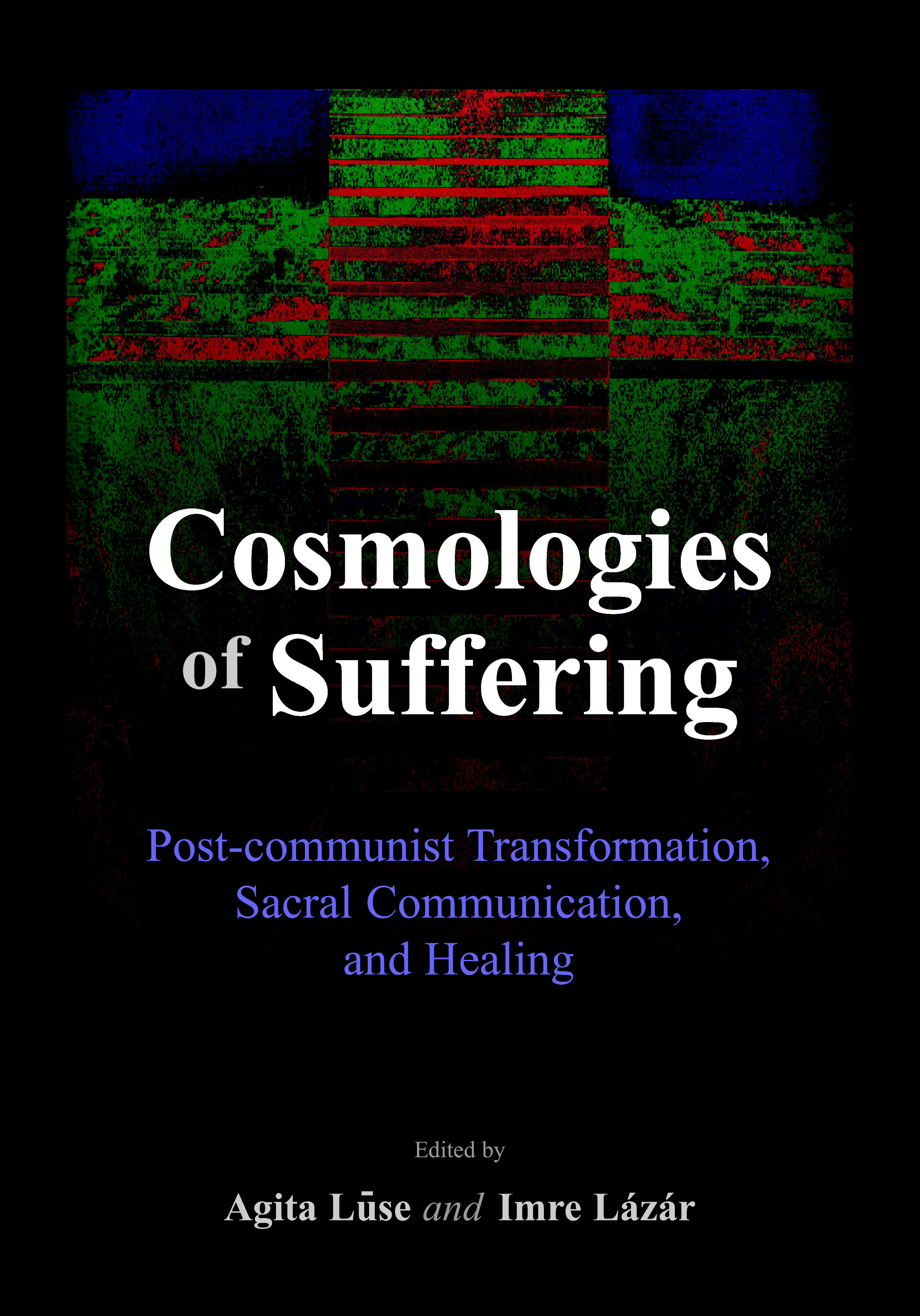
Cosmologies of Suffering

Post-communist Transformation, Sacral Communication, and Healing
Edited By: Agita Lūse

£34.99

This volume explores the permanent ‘transition’ and persistent social suffering in post-communist countries. Ethnographic accounts reveal how people cope with trauma by relinquishing reliance on the self and turning towards a higher power.

The edited volume elaborates on a range of themes that emerged during a workshop of the 8th biennial of the European Association of Social Anthropologists…
£34.99
£34.99
1-84718-258-5 , ,
Share

The edited volume elaborates on a range of themes that emerged during a workshop of the 8th biennial of the European Association of Social Anthropologists in Vienna in 2004. Among these themes are: the paradoxical permanence of ‘transition’ in post-communist countries, the accompanying persistence of social suffering and the structural conditions that give rise to it. A final theme focuses on the re­sources that people mobilize to cope with suffering and trauma. Ways of coping manifest a stance towards agency shared by sufferers from diverse post-communist regions, such as ethnically divided Croatia, politically and economically unstable Zimbabwe, relatively more peaceful countries such as Hungary, Poland and Slovenia, and, finally, two religiously unique areas in Siberia, Russia. Ethnographic accounts from these diverse settings testify that agency has often involved relinquishing reliance on one’s self and turning towards a power higher than the self, whether this is conceptualized through the lens of transcendence, religion, or cosmology.

Agita Lūse is lecturer in Social Anthropology program at Riga Stradins University and senior researcher at the Institute of Philosophy and Sociology of the University of Latvia. She has studied philosophy at the latter university, completed MSc course in anthropology at London School of Economics in 1995 and received PhD from Bristol University in 2006. In her doctoral thesis she explored the changing discourses of mental distress in post-Soviet Latvia. Her current research interests focus on social integration of psychiatric service users in that country. She has authored a number of articles in the field of anthropology of religion and medical anthropology, edited a volume on life-stories The narrative and the human life (Cilvēks. Dzīve. Stāstījums, Latvian Association of Anthropologists, 2002), and translated into Latvian several books, including C. Geertz’s Interpretation of Cultures (1998). She was recently elected to the Committee of Medical Anthropology Network of the European Association of Social Anthropologists.

Imre Lázár graduated from Semmelweis University of Medicine (Budapest) as a medical doctor in 1981. While undergoing training in psychotherapy in the late 1980s he became interested in medical anthropology. He received his MSc in Medical Anthropology from Brunel University and his PhD in Behavioural Sciences from the Hungarian Academy of Sciences, for the thesis Social-psychoimmunology. Psychoimmunological explanatory models in medical anthropology. He has been teaching medical anthropology since the Institute of Behavioural Sciences was founded at Semmelweis University in 1993. After he became the head of the Department of Medical Anthropology there in 2004 he started to organize an international MSc Course in Medical Anthropology in the region. Since 2003 he is associate professor at the Institute of Communication and Social Sciences at Károli Gáspár University of Reformed Church, Budapest. His research interests include human ecology, anthropology of dance, alternative medicine, medical pluralism and sacral communication. He has authored a number of monographs and edited volumes in Hungarian and co-edited (with H. Johannessen) the volume Multiple Medical Realities (Berghahn 2006).

Tatiana V. Barchunova, Dorota Hall, Vilmos Keszeg, László Kürti, Imre Lázár, Galina Lindquist, Agita Lūse, Barbara Potrata, Barbara Potrata, Tomasz Rakowski, Alexander Rodlach, Michaela Schaeuble, Marcellina Spannraft, Maria Tighe, Csaba Vass

Hardback

  • ISBN: 1-84718-258-5
  • ISBN13: 978-1-84718-258-6
  • Date of Publication: 2007-12-13

Ebook

  • ISBN: 1-4438-0400-2
  • ISBN13: 978-1-4438-0400-4
  • Date of Publication: 2007-12-13

Subject Codes:

  • BIC: JHM
  • THEMA: JHM
235
  • ‘This is a fascinating new series of ethnograhic studies of specific, mostly Eastern European and ex-Soviet mystically-orientated communities, grappling with
    - existential issues of suffering and meaning(lessness). Following the collapse of Soviet hegemonic communism and the well-known revitalisation of traditional and New Age worldviews, many people have embraced alternative cosmologies to generate new identities and meanings that are not dependant on empirically-