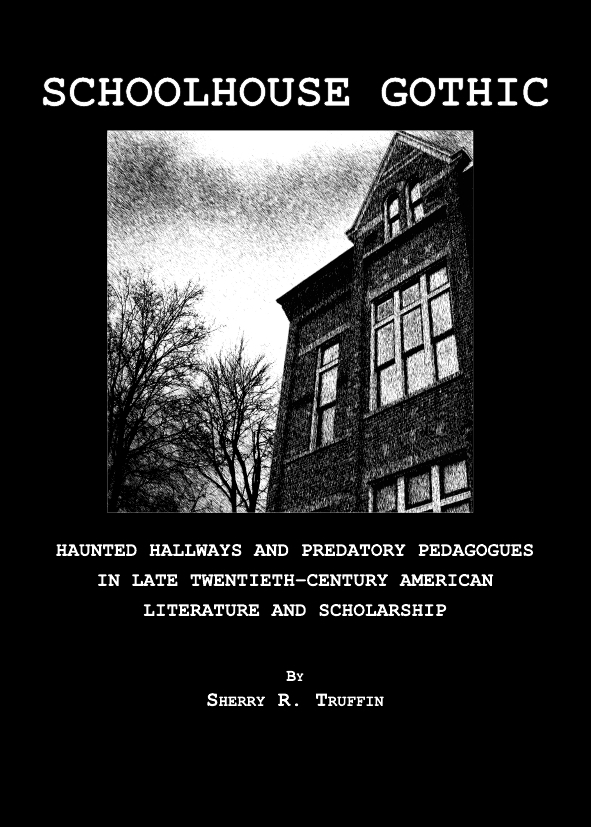
The “Schoolhouse Gothic,” undertaken by insiders and outsiders to the academy alike and embodied both in literature and in academic discourse, draws on Gothic metaphors and themes in representing and interrogating contemporary American schools and educators. Curses from the past take the form of persistent power inequities (of race, gender, class, and age) and, rather ironically, the very Enlightenment that was to save the moderns from rigid, ancient, mystified hierarchies. In Schoolhouse Gothic literature, including works by Stephen King, Flannery O’Connor, Toni Morrison, Joyce Carol Oates, and David Mamet, school buildings, classrooms, and/or offices, function as traps, or analogues to the claustrophobic family mansions, monasteries, and convents of old. In Schoolhouse Gothic scholarship, the trap is academic objectivity, viewed not as a lofty goal but rather as an institutional strategy of concealment that blinds the scholar to his or her own prejudices and renders even the most well-meaning complicit with inequitable power structures. The combination of curse and trap common to the Gothic scenario produces paranoia, violence, and monstrosity. In Schoolhouse Gothic literature, schools turn students into psychopaths and machines. In the scholarship, the product is discourse, or “epistemic violence” reified. The Schoolhouse Gothic suggests—at the very least—that Americans have become increasingly uneasy about the role of the academy, increasingly mistrustful of its guardians, and increasingly convinced that something sinister lies behind its
officially benevolent exterior.